Fiedler Men's Softball: one pitch over the fence

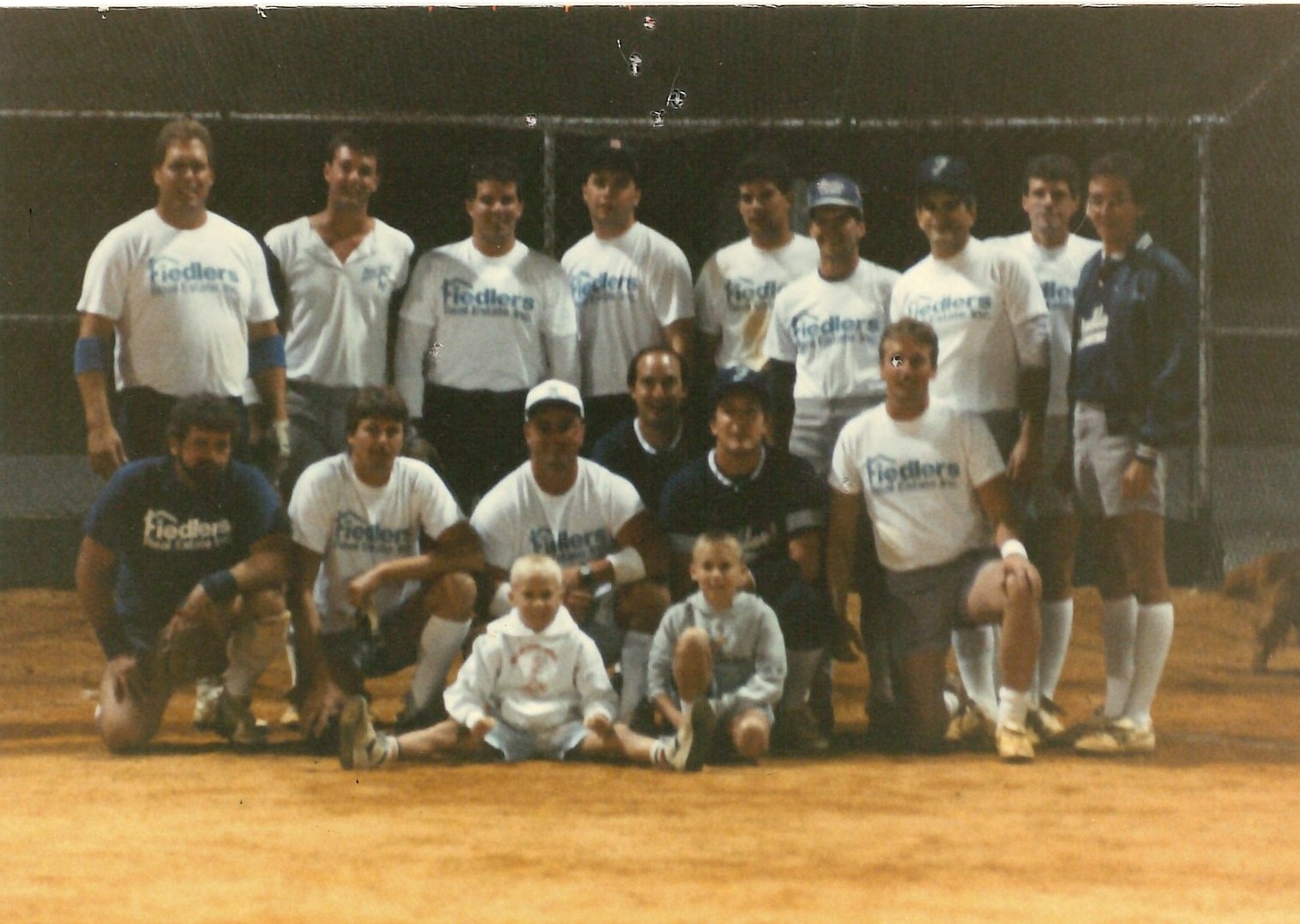
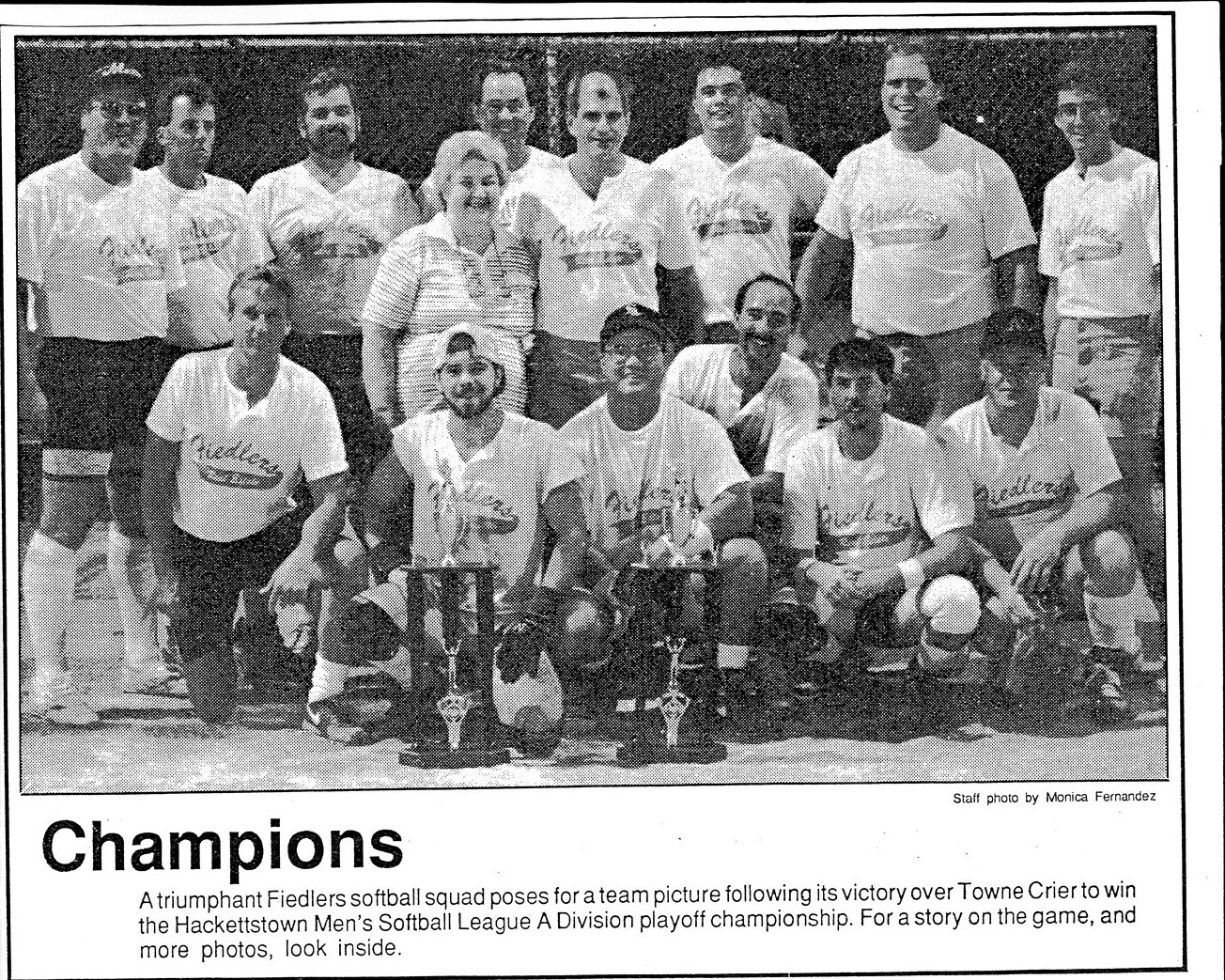
For more than three decades — 1976 through 2008 — the Fiedler Real Estate softball team played in the A Division of the Hackettstown Men’s Softball League, the top tier of a twenty-seven-team league, and won the championship eighteen times — more than six hundred games won, by Pete Olivieri’s own count. A local sports column once wrote that the Fiedler teams had “about as much success as the ‘27 Yankees.” The column was not exaggerating.
What made them hard to beat wasn’t recruiting, because there wasn’t any. The roster barely changed for three decades — the league’s own rosters bear it out — and in Pip Timbrell’s words, once someone became a Fiedler, they usually stayed until retirement or until life took them elsewhere. Dan Fiedler and Pete Olivieri at the heart of it, Pip, Gordy O’Hea, the Magennis brothers — Steve and Buddy — the Poyers: friends from the same streets, often the oldest team in the league, routinely beating rosters decades younger. Pip’s own words for it: best friends for life.
Then came the summer of 1990. Before the season was out, the league informed the team that two of its players hadn’t “proved” town residency by the paperwork deadline — one of them Gordy O’Hea. Gordy had grown up in Hackettstown and lived in town. The team pointed this out. The league wouldn’t budge: the deadline had passed.
So Dan Fiedler hired attorney Bob Russell and sued the Town of Hackettstown. The dispute went all the way to a town council meeting, recreation commissioner Nelson Hoyt across the table. In the end the team dropped the suit, and the town’s position stood: if Gordy plays, you forfeit.
The team’s answer, in Dan’s own words: “He’s our friend. We grew up with him. He’s been on our team for years. He’s going to play. It’s wrong.”
It all came to a head at the most important game of the season. Mid-game, comfortably ahead — the Fiedler teams usually were — Gordy stepped to the plate. Under league rules a player isn’t officially in the game until the first pitch. The newspapers had followed the lawsuit all season, and their photographers were waiting at the fence. Gordy got one pitch. He put it over the fence.
The Hubble Space Telescope had gone up that spring, and that’s what the sports page called it: a Hubble shot.
The team forfeited the game. Then they forfeited the season, on one sentence: we’re not playing without our friend.
When the controversy arose, John Mandick found himself in an unenviable position. Young and newly entrusted with responsibility in the league, he remembers recognizing even then that there was a gray area in the rules. In a small town, these weren’t strangers on opposite sides of an argument; they were people who knew one another, played ball together and would continue seeing each other long after the season ended. John remembers feeling, in that moment, as though he were being asked to choose between Hackettstown and Fiedler.
Perhaps the best indication that the situation was never quite black and white came the following season, when the rules were clarified so the same question would not arise again. Time has softened what was once a difficult moment, and John himself speaks about it now in the spirit that has sustained Hackettstown softball for generations: this is a friendly town, and keeping it that way matters.
The championships kept coming after that — eighteen in all, and twice the team won twelve playoff games in a row. Pip played until age sixty-three, the league’s second-oldest active player — and came back at seventy. Around the team through it all was a circle of friends from the same blocks — among them Pastor Frank Fowler of Trinity United Methodist, whose own story this archive will tell in time. The team itself outlasted the name on the shirts: in its last seasons it played as Huntington Fiedler Real Estate, and it came off the field for good in 2008.
That perspective carries even more weight because John never walked away from the league. He stayed, served and became an important part of what Hackettstown men’s softball is today. Decades later, the story isn’t really about one disputed season. It’s about a Fiedler team that left an extraordinary mark on local softball, a league that continued to grow, and people who were able to move beyond one hard situation and remain part of the same community.
Eighteen titles, one forfeited season — and fifty years on, the men who played are still best friends, still trading photographs, still finishing one another’s stories. The championships were never really the point. In this town, the name Fiedler meant — and still means — standing with your friends. Ask anyone who played.
Sources
- Written account of Phil "Pip" Timbrell, 2026
- Recorded recollections of Dan Fiedler, 2026, transcribed at the office
- Recollections of Pete Olivieri, 2026
- Recorded interview with John Mandick, Hackettstown Men's Softball League, 2026
- Recorded recollections of Lenee Fiedler O'Neill, 2026 — the Schanks
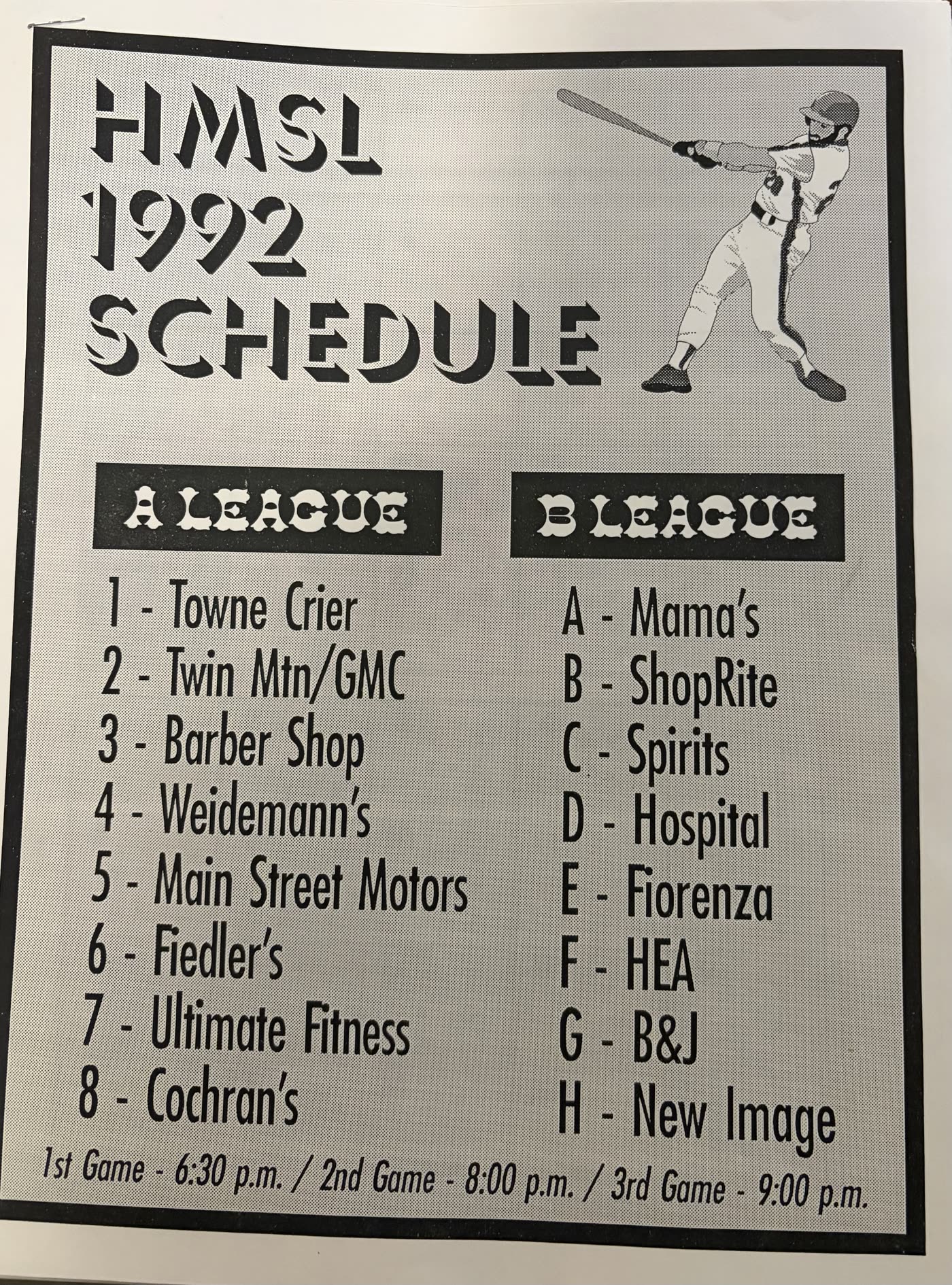
- Hackettstown Men's Softball League schedule, 1992 — John Mandick's collection
- Dave Boyer's "Boyer's Neighborhood" column, "Softball team's players are thrown out at home," 1990
- The Star-Gazette, "Softball eligibility may be subject of lawsuit," by Jodee Davis, July 5, 1990
- Champions photograph and caption, staff photo by Monica Fernandez — the family's clipping collection
- Championship jacket preserved by Lenee Fiedler O'Neill