Union Cemetery
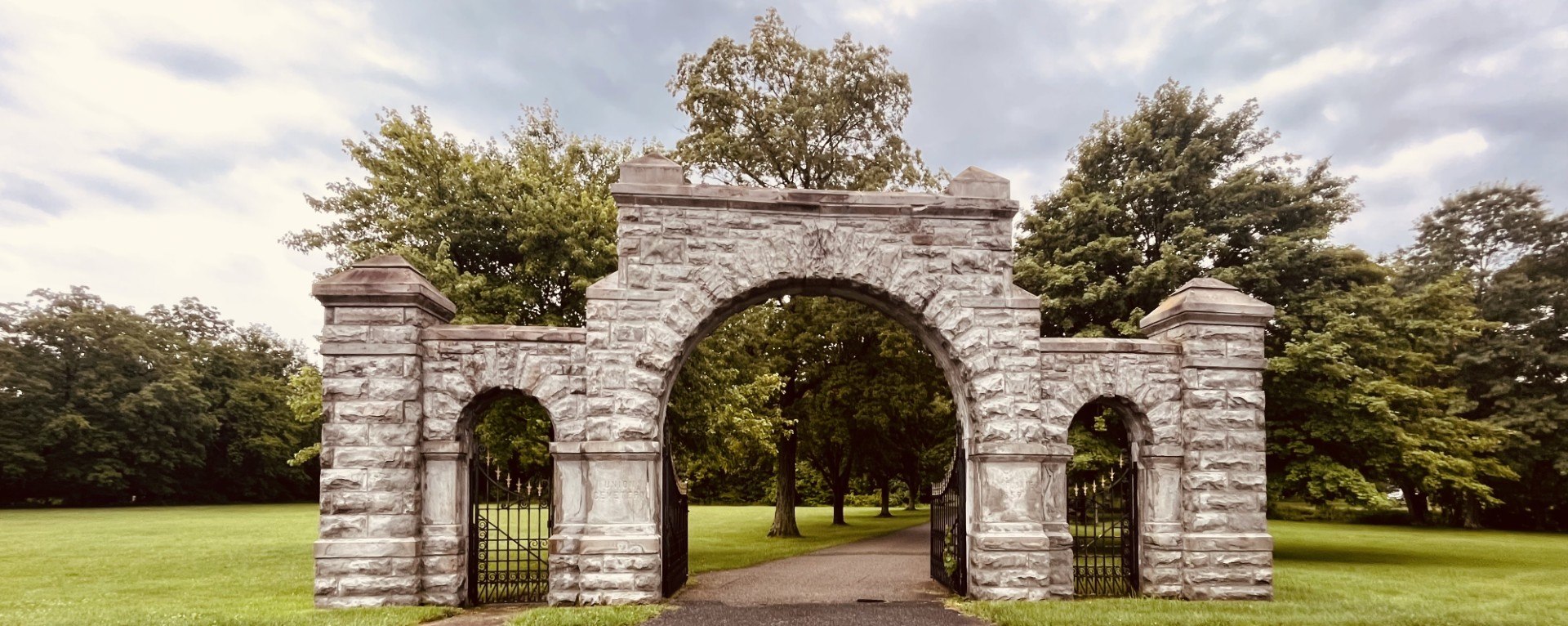
Behind a rough-cut stone arch on Mountain Avenue is a piece of Hackettstown that no single person owns.
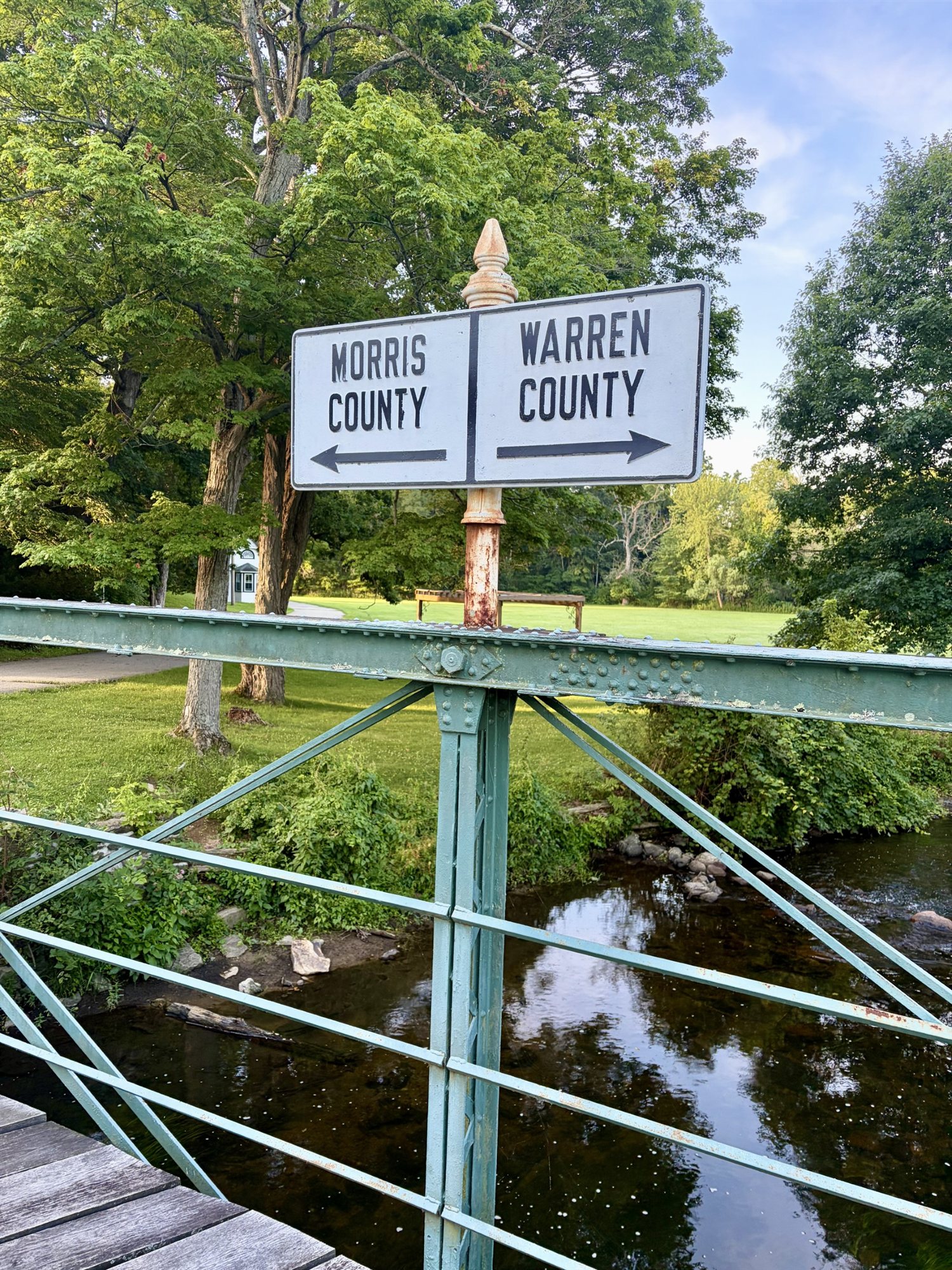
Union Cemetery earned its name honestly. It was organized on August 24, 1857, when a group of townspeople met at the Hackettstown Academy and incorporated under a New Jersey law, passed in 1851, that let a community charter a “rural cemetery association.” The idea behind such an association was ownership held in common: the cemetery belongs not to a church or a family or a company, but to the people who hold plots in it — a union of many owners rather than one. In 1859 the trustees bought the first nine acres from the Crane family, laid out the ground, and built a bridge across the Musconetcong River to reach it.
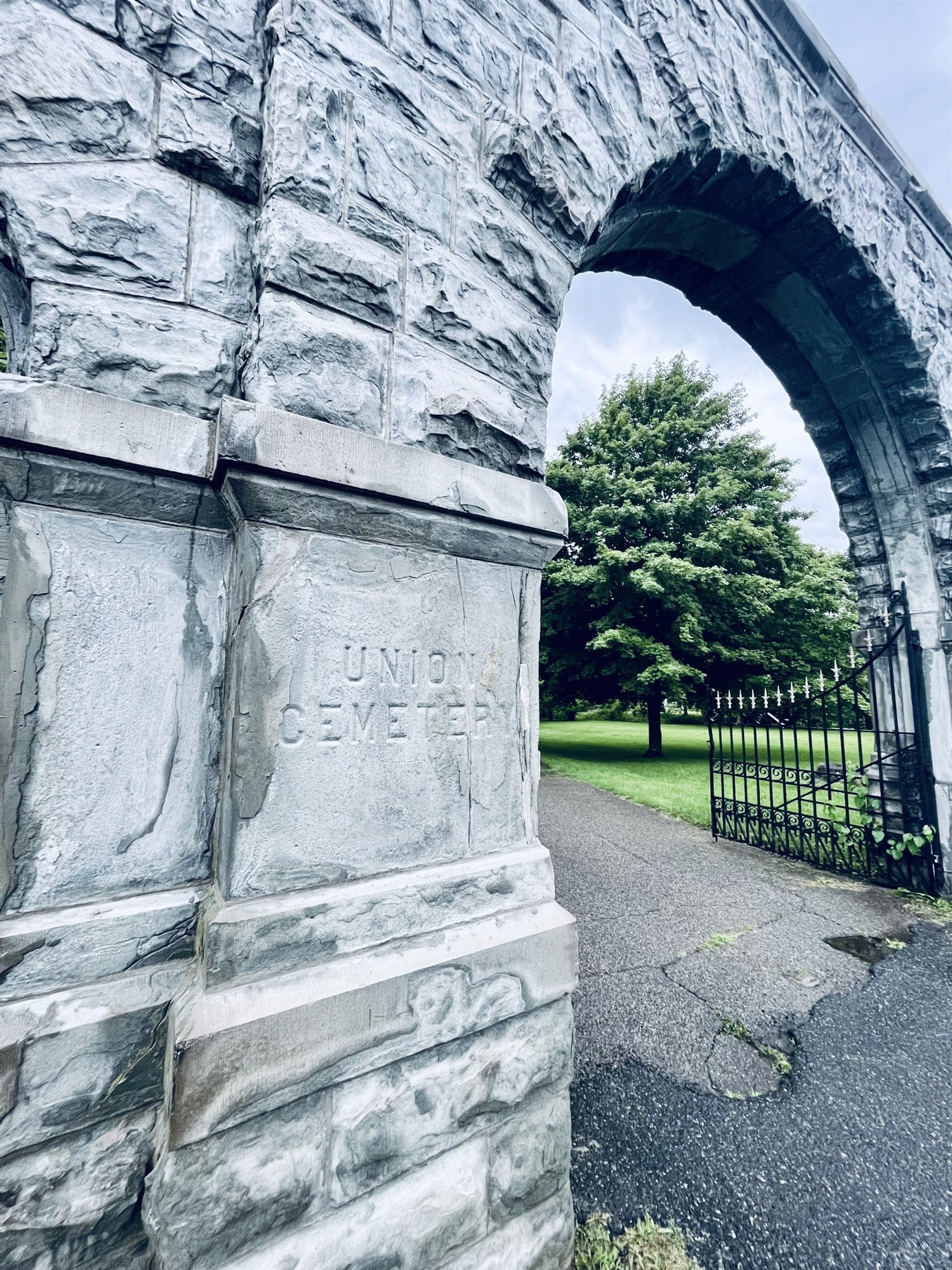
The arch came later. In May 1898, the firm of VanSternberg & Clark raised the stone entrance and iron gates that still frame the drive, at a cost of $2,367.50, with “Union Cemetery” cut by hand into the stone.
What the cemetery’s own records show, page after page, is a town quietly tending its own. For more than a century and a half, fathers and sons have taken seats on its board of trustees — Crate, Osmun, Dellicker, Thorp, Ort — the same Hackettstown names recurring across generations. (One line, from 1902, reads simply: no meetings, “due to the prevalence of small-pox.”) That care continues today under Roger Hines, a former mayor of Hackettstown, who worked these grounds every summer from 1980 to 2000 and full-time from 2000 to 2014 — the last ten years as superintendent — all while serving as a trustee since 1990. Since 2022 he has been the board’s president.
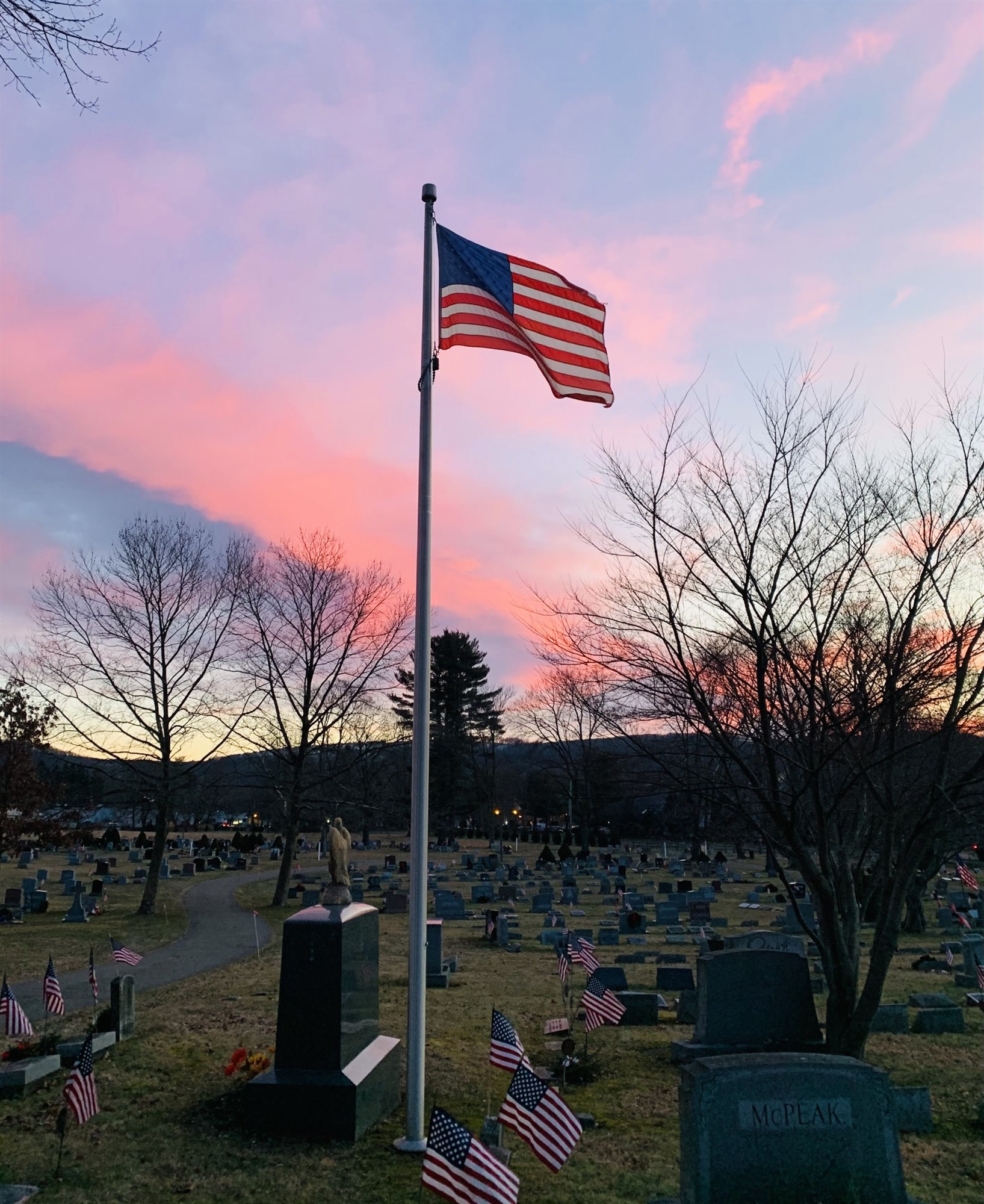
Walk the rows with Hines and the ground starts talking. The small flags that visitors take for military markers are mostly the fire department’s, he explains — placed by the department itself on the graves of Hackettstown’s firefighters, a quiet custom most of the town has never noticed. Memorial Day belongs to this ground too: the town’s parade has ended at Union Cemetery since 1868, three years after the Civil War. “There’s a lot of tradition there,” Hines says.
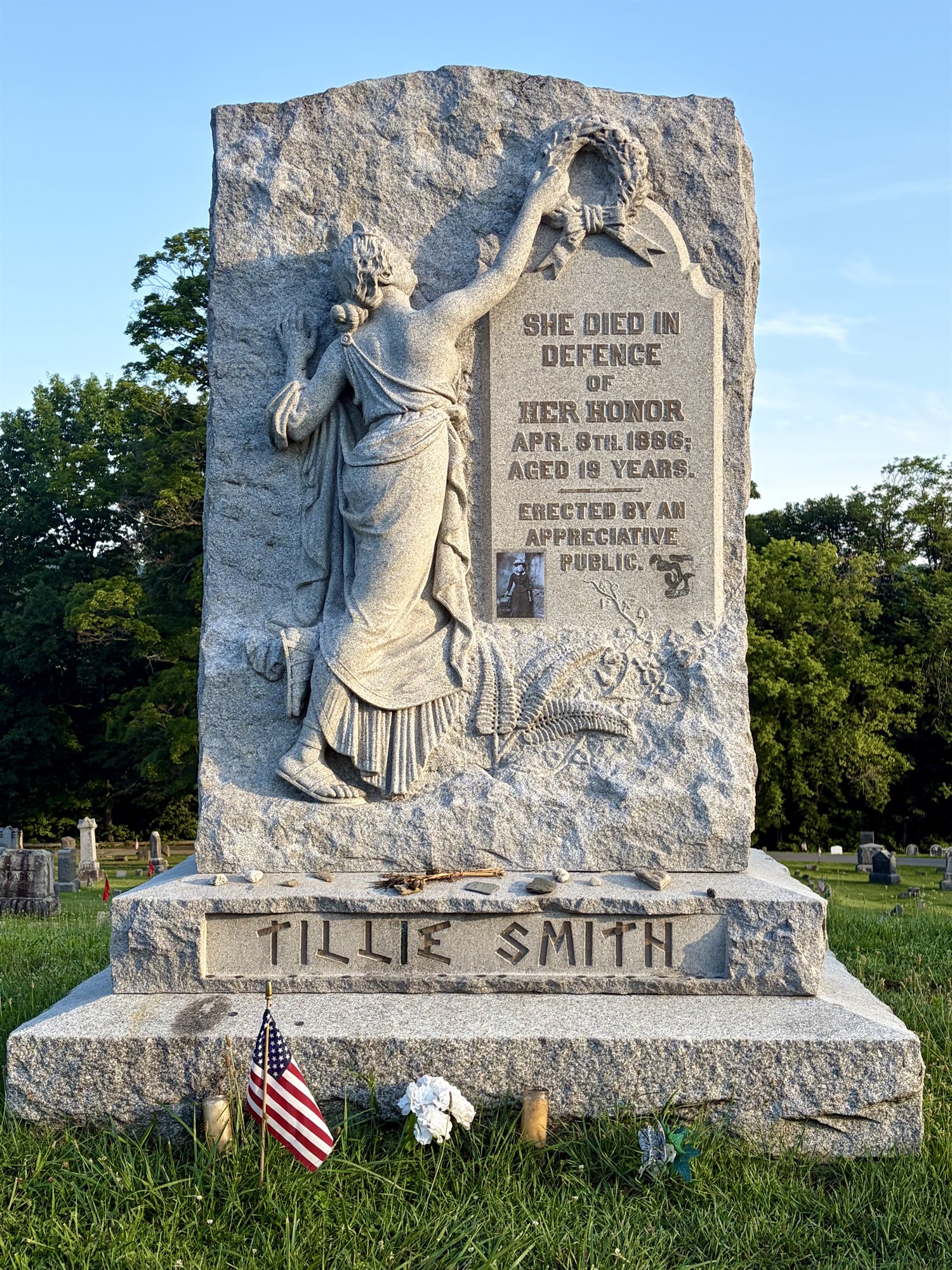
The ground keeps the town’s memory. Its best-known monument belongs to Tillie Smith, a nineteen-year-old kitchen worker at the Centenary Collegiate Institute — today Centenary University — who was killed on the school’s own grounds in April 1886. She was first laid in a pauper’s grave. Moved by her death, the public raised the money for the marble monument that marks her resting place now, unveiled the next year: a robed figure lifting a wreath, above the words “She died in defence of her honor.” A man was tried and convicted, but his guilt was doubted at the time and has been questioned ever since — the case fills a book, In Defense of Her Honor. What is certain is this: Tillie came from out toward Waterloo and walked miles to her work in town each day — and the town she walked to would not let her lie unmarked.
A hundred and forty years on, it is still the question visitors ask most — and these days they ask another Hines — Roger’s son keeps the grounds now, as his father once did: where is Tillie? She lay first in the public grounds, Roger explains — it was the town’s raised money, after the New York papers made her case famous, that carried her to the hilltop. And the asking has never stopped: Maryann McFadden’s novel about the case brought a fresh wave of visitors up the hill, and for years Centenary’s freshman initiation sent students down to pay Tillie a visit. Hines has watched the town grow around these grounds for more than forty years, to ten thousand people now. His verdict: “It still retains the small-town flavor.”
Nearby rests William Moore Everitt, one of the town’s leading citizens of that era and, fittingly, a longtime president of the cemetery’s own board. His story — and the 1875 house he built that still stands on High Street — deserves its own telling.
And among the neighbors and clients of three generations lie Leonard and Helen Fiedler, the founder of this firm and his wife, whose crystal shop stood on Main Street — at rest in the ground the whole town keeps.
Sources
- Union Cemetery Association of Hackettstown — association records (1857 charter and trustee rolls)
- Interviews with Roger Hines, President, Union Cemetery Association, 2026 — including a recorded conversation with January O'Neill, August 2026
- Denis Sullivan, *In Defense of Her Honor: The Tillie Smith Murder Case*
- Centenary University — Taylor Memorial Library Archives, Hackettstown